
Cannabinoid education is a fascinating and continually developing area of wellness science. At Spirit Guide Wellness, we’ve spent years learning about hemp, cannabinoids, extraction, formulation, testing, and the endocannabinoid system.
This resource center is designed to make cannabinoid science easier to understand without unnecessary jargon. Explore our cannabinoid education and resources to learn more about CBD, CBG, CBDA, CBN, and other cannabinoids.
We believe informed customers make better decisions. Our goal is to provide clear, balanced educational information while recognizing that cannabinoid research is continually evolving.
Explore Our Cannabinoid Education & Resources
CBD (cannabidiol) is one of the most widely studied cannabinoids found in hemp and cannabis. Unlike THC, CBD is not intoxicating. Learn about what CBD is, how it interacts with the body’s endocannabinoid system, and what current research tells us about this versatile cannabinoid.
CBD and CBG are both non-intoxicating cannabinoids found in hemp, but they have different chemical structures and areas of scientific interest. Explore the similarities and differences between CBD and CBG, including how researchers are studying their interactions with the body’s endocannabinoid system and other biological pathways.
CBDA and CBGA are acidic cannabinoids that naturally occur in raw hemp before heat or other processing changes their chemical forms. Learn how CBDA and CBGA differ from CBD and CBG, what researchers are studying about these cannabinoids, and why their acidic forms are an important part of cannabinoid science.
CBN (cannabinol) is a cannabinoid that forms as THC gradually breaks down over time. It is generally non-intoxicating at typical amounts and is being studied for its potential effects on sleep, relaxation, appetite, and other areas of health. Learn what is currently known about CBN and where research is still developing.
CBC (cannabichromene) is a non-intoxicating cannabinoid found in hemp and cannabis. It is being studied for how it interacts with the body’s endocannabinoid system and other biological pathways. Research on CBC is still developing, and scientists are continuing to explore its potential biological effects.
Full-spectrum, broad-spectrum, and isolate describe different types of cannabinoid extracts. Full-spectrum products contain multiple naturally occurring hemp compounds, broad-spectrum products contain multiple compounds with THC removed or not detected according to the product’s testing, and isolate products contain a single purified cannabinoid. Learn how these extract types differ and how to read product labels and laboratory testing results.
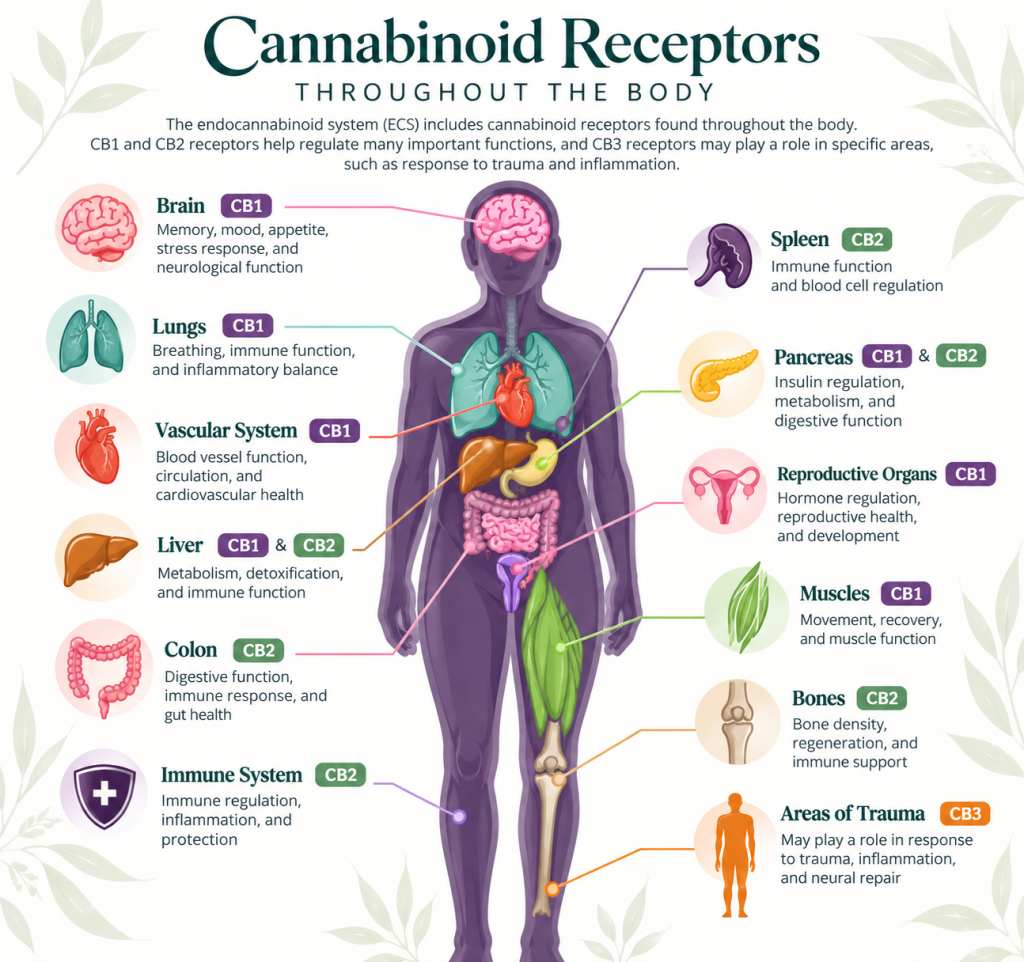
The endocannabinoid system (ECS) is a biological signaling system found throughout the body. It helps regulate processes such as mood, sleep, appetite, stress response, pain signaling, and immune activity. The ECS includes cannabinoid receptors, naturally produced endocannabinoids, and enzymes that help make and break down these signaling molecules. Learn how cannabinoids from hemp may interact with this system and why ECS research is an important part of cannabinoid science.
Learn how to read a Certificate of Analysis, understand cannabinoid results, check THC levels, and better understand laboratory testing.
Learn the difference between THC and THCA, how heat can change THCA into THC, and what “THC-free” means when evaluating cannabinoid products and laboratory testing.
Learn what pet owners should know about cannabinoids, including THC-free options, product ingredients, laboratory testing, and important considerations for dogs, cats, horses, and goats.
Trusted Resources & Further Learning
Project CBD has been an important educational resource throughout our learning journey at Spirit Guide Wellness. We appreciate their commitment to cannabinoid education and research and recommend their resources for anyone who wants to learn more about CBD and cannabis science. Spirit Guide Wellness is also listed in the Project CBD retailer locator.